Buildings
Facade maintenance decides how a building ages in public
Buildings do not weather evenly. Where the water runs and who can reach the surface decide what a street sees in ten years.
There is a short answer about facade maintenance and a useful one, and they are not the same. What follows is the useful one.
The short version
- Rainwater run-off patterns explain most visible facade staining.
- Access equipment must be designed in or maintenance will not happen.
- Sealed joints have far shorter lives than the panels they join.
Water leaves a record on every elevation
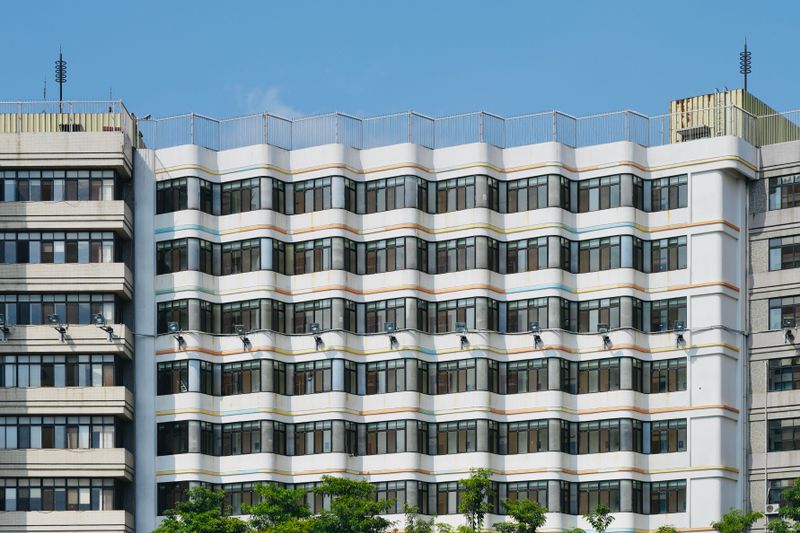
Rain arrives on a facade unevenly, driven by wind against one or two elevations far more than the others on the same building. Where water sheets down an unbroken surface it washes it, and where it concentrates at a projection it deposits dirt in streaks below. This is why staining appears under window sills, beneath copings and at the ends of horizontal bands rather than uniformly across a wall.
A drip detail, which is a small groove on the underside of a projection, throws water clear and prevents it tracking back onto the wall. The presence or absence of that groove, a detail costing almost nothing, is visible from the pavement a decade later as a pattern of dark streaks.
Access equipment is a design decision
A facade can only be cleaned, inspected and repaired if there is a safe way to reach every part of it at reasonable cost. Cradles running from roof-mounted rails, mast climbers and rope access each impose requirements on the roof, the parapet and the facade profile.
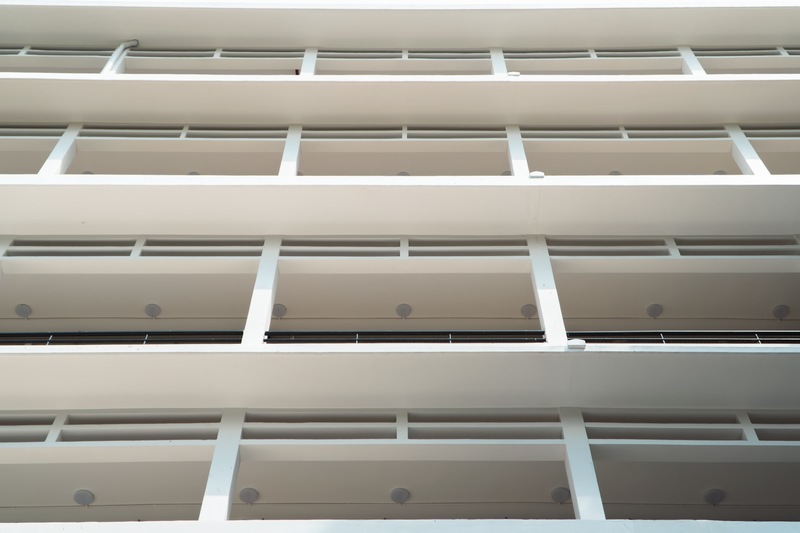
On the ground, deeply modelled facades with recesses and projections are harder to reach, so the elevations that look richest are frequently the ones maintained least. If access was not designed in, the building will be maintained only when a defect becomes serious enough to justify scaffolding the whole elevation. That converts a routine cost into an occasional large one, which is exactly the pattern that makes owners defer work indefinitely.
Materials age at different rates and in different directions
Stone and brick generally weather in ways many observers find acceptable, gaining patina rather than looking damaged, provided the detailing sheds water. Painted render depends entirely on the coating, and its appearance declines sharply at the point the coating fails rather than gradually before it. Metal panels hold their appearance well and show every dent, and replacement of a single panel years later rarely matches the weathered originals.
Timber cladding greys unevenly depending on exposure, which is either the intended effect or a complaint depending on what the client was told. Choosing a material is therefore choosing an ageing behaviour, and the drawings that sell a scheme show none of it.
Sealant is the shortest-lived component
Movement joints between panels are filled with sealant, and sealant has a service life far shorter than the panels on either side of it. When it fails, water enters the construction rather than running down the face, and the damage appears somewhere other than the failure. Replacing sealant across a whole facade is a significant recurring cost that is rarely mentioned when a panel system is selected.
In practice, rainscreen construction reduces the dependency by accepting that water will get behind the outer layer and draining it away deliberately.
Whether the facade relies on a seal or on drained construction is the single most useful thing to know about its long-term behaviour.
Who pays decides what happens
In a building with many owners, facade work requires collective agreement and collective money, and both are harder to assemble than the work is to specify. Sinking funds set aside for major works exist in some jurisdictions and not others, and where they are absent large repairs arrive as a shock.
A developer who sells and leaves has no exposure to the maintenance cost, so nothing in the transaction rewards a durable specification. Long leaseholds, build-to-rent and owner-occupied models each produce different incentives, and the facade quality tends to follow the incentive. This is why apparently identical buildings in the same street can look entirely different after a decade of ownership.
What weathering tells you from the pavement
Look at the north or shaded elevation for organic growth, since persistent green staining indicates surfaces that stay damp and details that hold water. Check beneath window sills for the two dark lines that show water has been running off the ends rather than being thrown clear.
Look for a single replaced panel of a different tone, which reveals both a past repair and the fact the material does not match once weathered. Note any roof rails, davit sockets or parapet fixings, because their presence means somebody expected the facade to be reached regularly. A building that looks well maintained usually has good details rather than expensive materials, and the difference is legible from across the street.
The takeaway
Follow the water. It writes the maintenance history of a building on its own face.
Measure the walk, not the map.
Questions readers ask
Why do some buildings look dirty within a few years?
Almost always run-off patterns. Water concentrated at projections without drip details carries dirt down the wall in streaks, and it shows most on light, smooth surfaces.
Is expensive cladding better value over time?
Not reliably. Detailing, drainage and access matter more than material cost. A modest material that sheds water and can be reached will outperform a costly one that cannot.