
Climate & Cities
Permeable paving works until nobody sweeps it
Surfaces that let rain soak through are a standard drainage measure. Their performance depends entirely on a maintenance task nobody budgets.
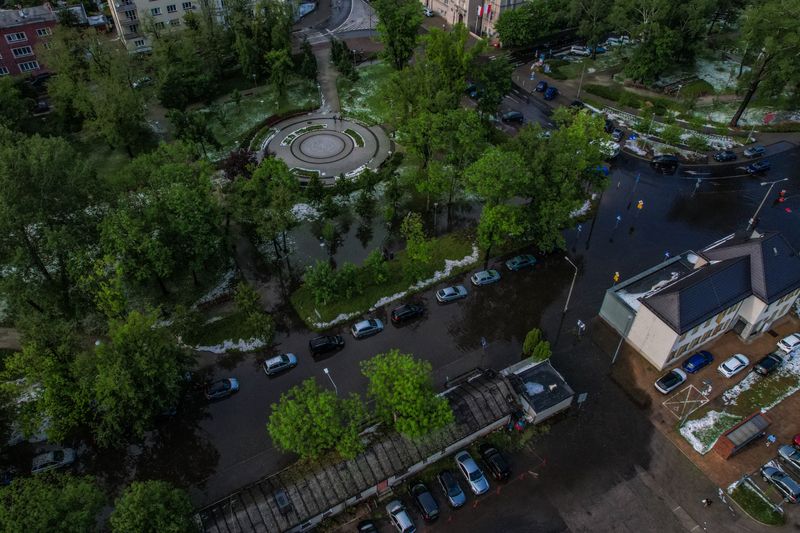
These are listed in the order worth acting on, which with permeable surfaces is not the order they are usually presented in.
What matters most
- Permeable surfaces clog with fine sediment and lose capacity over time.
- They need subsurface storage and somewhere for water to go.
- Unsuitable ground conditions make infiltration impossible regardless of surface.
The surface is only the top of the system
Permeable paving lets water pass through the surface into a layer of open-graded aggregate beneath, which stores it temporarily. From there the water either infiltrates into the ground or is released slowly into a drain at a controlled rate. The storage layer is doing most of the work, and its depth is sized for a design storm at a chosen return period.
A permeable surface laid over an impermeable base with no outlet simply holds water and then floods. This is why the specification of what sits under the paving matters far more than the appearance of the blocks on top.
Clogging is the predictable failure
Fine sediment from tyres, soil, leaves and general dirt accumulates in the voids and progressively reduces infiltration capacity. The decline is gradual and invisible until the surface starts to pond during ordinary rain, by which point capacity has fallen substantially. Regular sweeping with a suction sweeper restores much of the capacity and is the standard recommended maintenance.
That maintenance is rarely written into an ongoing budget, and the sweeping equipment required is not always what the authority owns. A permeable car park that has never been swept is functionally an impermeable one with a more expensive surface.
Ground conditions decide whether infiltration is possible
Clay soils accept water very slowly, so infiltration is limited and the system must be sized for slow release rather than soakaway. A high groundwater table leaves no capacity beneath the storage layer, which removes infiltration as an option entirely.
Contaminated ground raises the question of whether infiltrating water would mobilise pollutants downward, which is a regulatory matter in most countries. Steep slopes cause water to run within the storage layer rather than infiltrating evenly, requiring internal barriers. A ground investigation before design is therefore not optional, and skipping it is the second commonest cause of failure after clogging.
What it is good for and what it is not
Permeable surfaces suit car parks, service yards, courtyards and lightly trafficked streets where sediment loading is moderate. They are less suitable where heavy vehicles turn frequently, where sediment is deposited constantly or where the surface must be gritted heavily in winter. Grit and sand applied for ice are a direct clogging source, which creates a conflict in cold climates.
In practice, combining permeable areas with planted swales and basins spreads the function across several elements rather than relying on one. The general principle is to use several small measures across a site rather than one large one, since failures then affect only part of the system.
The heat benefit is separate and smaller
Permeable surfaces retain some moisture, which evaporates and produces a modest cooling effect compared with sealed paving. That effect is real and much smaller than the difference shade makes, so it should not be the main justification. Lighter coloured permeable surfaces reflect more solar radiation, which contributes more to surface temperature than the permeability does.
Where cooling is the objective, planting and shade deliver considerably more per unit of budget. Being clear about which benefit is being bought avoids specifying an expensive surface for the wrong reason.
Checking a permeable surface
Look for ponding after moderate rain, since standing water on a permeable surface indicates clogging or a failed base. Check the joints between blocks for fine material filling the voids, which is where the blockage physically occurs.
Look at what drains onto the surface from adjacent areas, because run-off from a landscaped bank delivers sediment continuously. Ask what the maintenance regime is and when it was last carried out, as the answer is usually revealing. Note the age of the installation, since capacity declines over years and few schemes are ever tested after handover.
Everything above, in order of what to do first
- The surface is only the top of the system. Permeable paving lets water pass through the surface into a layer of open-graded aggregate beneath, which stores it temporarily.
- Clogging is the predictable failure. Fine sediment from tyres, soil, leaves and general dirt accumulates in the voids and progressively reduces infiltration capacity.
- Ground conditions decide whether infiltration is possible. Clay soils accept water very slowly, so infiltration is limited and the system must be sized for slow release rather than soakaway.
- What it is good for and what it is not. Permeable surfaces suit car parks, service yards, courtyards and lightly trafficked streets where sediment loading is moderate.
- The heat benefit is separate and smaller. Permeable surfaces retain some moisture, which evaporates and produces a modest cooling effect compared with sealed paving.
- Checking a permeable surface. Look for ponding after moderate rain, since standing water on a permeable surface indicates clogging or a failed base.
The takeaway
Ask who sweeps it. That answer is the design life of the whole system.
Cities are built by a thousand small permissions, not one big plan.
Questions readers ask
How long does permeable paving keep working?
It depends on sediment loading and sweeping. Capacity declines steadily without maintenance, and neglected surfaces can lose most of their infiltration within years rather than decades.
Can permeable paving be used anywhere?
No. Clay soils, high groundwater, contaminated ground and steep slopes all constrain it. A ground investigation determines whether infiltration or slow release is the appropriate design.


