
Public Space
A square without bins becomes a square about bins
Waste is the least discussed element of public space and the one that determines whether people want to be in it.
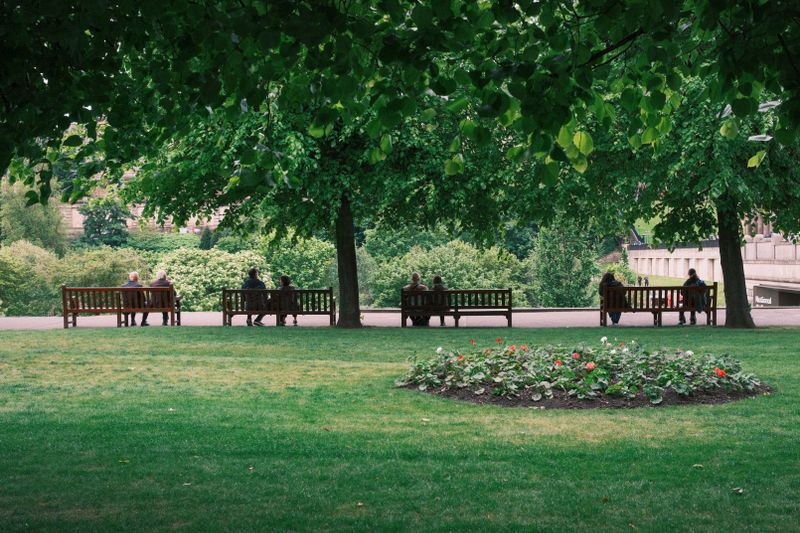
Everything below about waste in public space comes from what actually happens rather than from what is supposed to.
What holds up in practice
- Bin placement follows pedestrian flow, not visual composition.
- Collection frequency matters more than bin capacity.
- Litter accumulates fastest where a space already looks neglected.
Litter follows the food, and food follows the seating
Waste generation in a public space is concentrated wherever people eat, which is wherever there is somewhere comfortable to sit near somewhere to buy something. A bin placed for visual tidiness at the edge of a space will be ignored by people sitting in the middle of it. The practical rule is that a bin must be within a very short walk of the seating, or the seating becomes the bin.
Placement is therefore a question of observing where people actually sit and eat rather than of distributing bins evenly across a plan. Spaces that were designed before their uses settled almost always need bins relocated after the first season of use.
Capacity is less important than emptying
A large bin emptied infrequently overflows just as visibly as a small one, and the overflow is what people react to. Peak generation is sharp, concentrated at lunchtime and in the evening, so average capacity is a misleading measure.
Across a network, sensors that report fill levels allow collection to follow demand rather than a fixed round, which is one of the few clear wins in this area. Where collection rounds are fixed by contract, changing them requires renegotiation, which is why obvious improvements often stall. The maintenance contract is therefore part of the design of the space, though it is written long after the drawings are approved.
Neglect is self-reinforcing
A space that already has litter, graffiti and damaged furniture attracts more of each, because the local norm has visibly shifted. Rapid removal is the standard response, and its effectiveness depends on speed rather than on thoroughness.
The same effect works positively, since a well-kept space is treated better by the people using it without any enforcement. This makes maintenance frequency a behavioural intervention rather than merely a cleaning cost. Budget reductions in cleaning therefore produce a decline that costs more to reverse than the saving achieved.
Separation only works if it is legible
Recycling requires people to make a decision in a second or two while carrying something they want to put down. Bins that look similar, are labelled in small text or use unfamiliar colour codes produce contamination that sends the whole load to disposal. Clear apertures shaped for the material, bold graphics and consistent colours across a city all measurably improve sorting.
Consistency matters most, since a visitor cannot learn a different system in every district of the same city.
Where contamination rates are high, the usual cause is the bin design rather than public indifference.
Animals, weather and the details that fail
Open-topped bins in cities with gulls, crows or foxes are emptied by wildlife before they are emptied by staff. Covered apertures and weighted lids solve this and make deposit slightly harder, which is a genuine trade-off.
Rain fills open bins with water, which makes bags heavy, splits them and creates a hazard for collection staff. Bins fixed close to walls or seating attract accumulation in the gap behind them, which is rarely cleaned. These details are minor individually and together determine whether a space looks maintained on an ordinary Tuesday.
Comparisons across cities are difficult because nobody counts the same things.
Judging a space by its waste
Look at where litter accumulates, since it maps where people gather and where the bins are not. Check the bin apertures for evidence of what is being put in, because domestic waste in street bins signals a gap in household collection nearby. Note whether commercial bags are left on the pavement at certain hours, as trade waste is a separate system that frequently dominates the visible picture.
Over a decade, see whether the bins match those elsewhere in the city, since a bespoke design usually means spare parts are hard to obtain. A space with no visible waste problem has a management regime behind it, and that regime cost somebody money.
The takeaway
Watch where people sit. The bins belong there, whatever the plan says.
The design decision is visible long after the people who made it have gone.
Questions readers ask
Why is there litter when bins are provided?
Usually because the bins are not where people are, or they are full. Distance and overflow explain most litter far better than public attitudes do.
Does removing bins reduce litter?
It has been tried and results are mixed. It can work where people are travelling through and will carry waste onward; in places where people sit and eat it generally does not.


