
Public Space
An outdoor space with bad acoustics will never be used
Hard surfaces, parallel walls and traffic noise can make a beautifully designed square impossible to hold a conversation in.
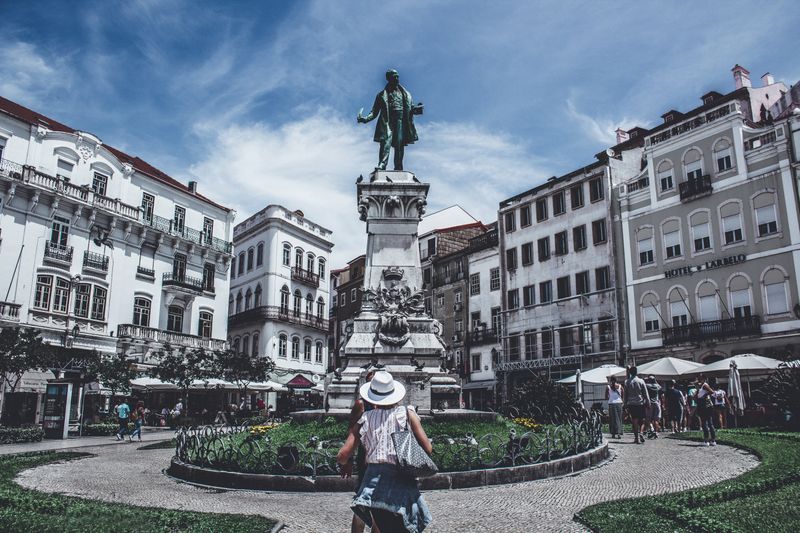
What follows is an argument about acoustics in public space, and about where the received version of it stops being true.
The argument in brief
- Conversation becomes difficult once background noise passes a modest threshold.
- Hard reflective surfaces raise perceived noise without adding any source.
- Water features mask traffic noise selectively rather than reducing it.
Conversation sets the usability threshold
The practical test of an outdoor social space is whether two people can talk at a normal volume across a table. Once background noise rises past a moderate level, people either raise their voices, move closer, or leave. Most users never articulate this as a noise problem; they simply describe the space as unpleasant.
A square adjacent to a busy road with no attenuation fails this test regardless of how well it is furnished.
Hard surfaces multiply what is already there
Stone, glass and concrete reflect sound, so the same traffic source produces a higher level in a hard-surfaced square than in a planted one. Parallel facades create repeated reflections that raise reverberation and make speech harder to follow. Absorptive surfaces — dense planting, soft ground, textured facades, green walls — reduce this measurably.
The acoustic consequence of a material palette is rarely considered when the palette is chosen.
Traffic is usually the dominant source
Vehicle noise from an adjacent road typically exceeds anything generated within a public space. Reducing traffic volume or speed is therefore the most effective acoustic intervention available and is not usually within the landscape designer's control.
On the ground, where the road cannot be changed, building form, planting and level changes can shield part of the space. A single sheltered corner with lower noise will be used far more heavily than an exposed larger area.
Water masks rather than reduces
A fountain adds sound, and the reason it helps is that broadband water noise is perceived as pleasant and covers intermittent traffic sounds. The measured level goes up while the perceived quality improves, which is a genuine and counterintuitive effect. It works best close to the feature and does nothing at the far side of a square.
Water features also carry maintenance, water use and cold-weather shutdown costs that are frequently underestimated.
Quiet is a distributed resource
Relatively quiet areas within noisy cities are valuable and are lost incrementally without anyone noticing. Some jurisdictions require identification and protection of quiet areas as part of noise management planning.
At street level, courtyards, closed squares and interior gardens are the usual candidates, and they are also the spaces most attractive for infill development. Protecting them requires recognising them as an asset before the application arrives.
Local statute governs most of this, and it varies street by street.
Sound design is possible and rare
Deliberate use of surfaces, planting, water, screening and spatial arrangement can make a space audibly better without reducing the source. Soundscape approaches assess what a space sounds like rather than only how loud it is, and are used more in research than in practice.
Testing an outdoor space by standing in it and trying to have a conversation is a crude method that catches most failures. It is also a test that almost never appears in a design review.
The takeaway
Stand in the space and try to have a conversation. That is the test the drawings cannot run.
The design decision is visible long after the people who made it have gone.
Questions readers ask
Why do some squares feel noisier than the traffic explains?
Reflections from hard parallel surfaces raise both level and reverberation. The same traffic source in a planted, irregular space sounds considerably quieter.
Do water features actually reduce noise?
They add sound rather than reducing it. The masking effect makes traffic less noticeable near the feature and does nothing to the measured level or to distant parts of the space.


