
Planning
Brownfield land is expensive before anything is built on it
Reusing industrial land is the right answer environmentally and it starts with a bill for everything that happened there before.
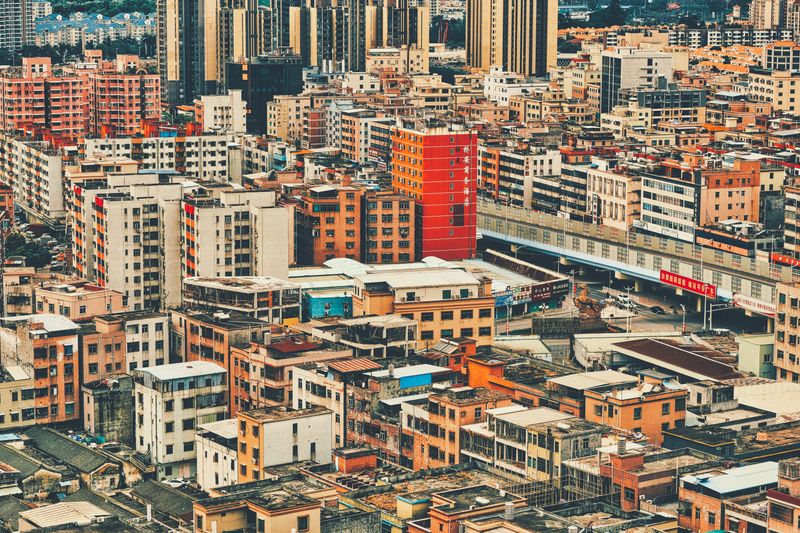
This looks at brownfield development from the practical end — what holds up once conditions stop being ideal.
What holds up in practice
- Remediation costs are discovered progressively and are hard to price in advance.
- Liability for historic contamination varies substantially between legal systems.
- Public remediation funds exist in several countries to bridge the viability gap.
The cost arrives before the revenue
Demolition, foundation removal, ground investigation, contamination treatment and disposal all happen before any saleable floor area exists. These are funded from the developer's capital at the riskiest point in the project. A greenfield site of the same area starts from a clean surface with none of that expenditure.
That difference is why brownfield-first policies need financial instruments behind them to work.
Contamination is discovered, not predicted
Site investigation samples a fraction of the ground, so the extent of contamination is an estimate until excavation begins. Historic uses give strong indications — gasworks, tanneries, dry cleaners, fuel depots, foundries — and the specifics remain uncertain.
On the ground, cost overruns on remediation are therefore common and are priced as risk in the land bid, which lowers land value. Where the risk is large enough, the site does not transact at all and remains derelict.
Liability rules shape behaviour strongly
Some legal systems place liability on the original polluter, some on the current owner, and many on a hierarchy between them. Where current owners carry liability, there is a strong incentive not to investigate ground conditions and not to sell.
Over a decade, where the state carries residual liability, remediation happens faster and public cost rises. This is one of the clearest cases where a legal rule determines physical outcomes across a whole city, and it differs by jurisdiction.
Remediation methods vary in cost by an order of magnitude
Excavating contaminated material and sending it to landfill is fast, expensive and increasingly restricted by waste regulation. In-situ and on-site treatment methods are cheaper per tonne, slower, and require space on site and time in the programme. Containment strategies leave material in place beneath engineered barriers, which is cheapest and constrains future use and excavation.
The method chosen at remediation stage sets what the site can accommodate for decades afterwards.
Existing infrastructure is the offsetting advantage
Brownfield sites usually sit within the built area with roads, drainage, power and transport already present. That avoids the infrastructure cost a greenfield site imposes, which is frequently borne by the public rather than the developer. Comparing brownfield and greenfield on land preparation cost alone therefore flatters greenfield systematically.
In practice, whole-cost comparisons including infrastructure and transport consequences generally shift the balance considerably.
Comparisons across cities are difficult because nobody counts the same things.
Public intervention is usually necessary
Where remediation cost exceeds the value uplift, no private party will act, and the site stays derelict indefinitely. Grant funding, public land assembly and development corporations exist in various countries precisely to bridge that gap. Recovering the subsidy through later land value uplift is possible where the public body retains an interest in the land.
Across a network, selling remediated land outright transfers all the subsequent uplift to the buyer, which is a policy choice rarely examined.
The takeaway
The cost of a brownfield site is in the ground. Find out what was there before you value it.
The design decision is visible long after the people who made it have gone.
Questions readers ask
Is brownfield development always preferable?
Environmentally it avoids consuming undeveloped land and uses existing infrastructure. Financially it can be unviable without support, which is why brownfield-first policies need funding attached to work.
Who pays to clean up contaminated land?
It depends entirely on the jurisdiction. Rules assign liability variously to the original polluter, the current owner or the state, and the assignment strongly affects whether sites get reused.


