
Transit
A depot decides where a bus route can go
Vehicles have to sleep somewhere, be cleaned somewhere and be repaired somewhere. Those sites quietly constrain the whole network.
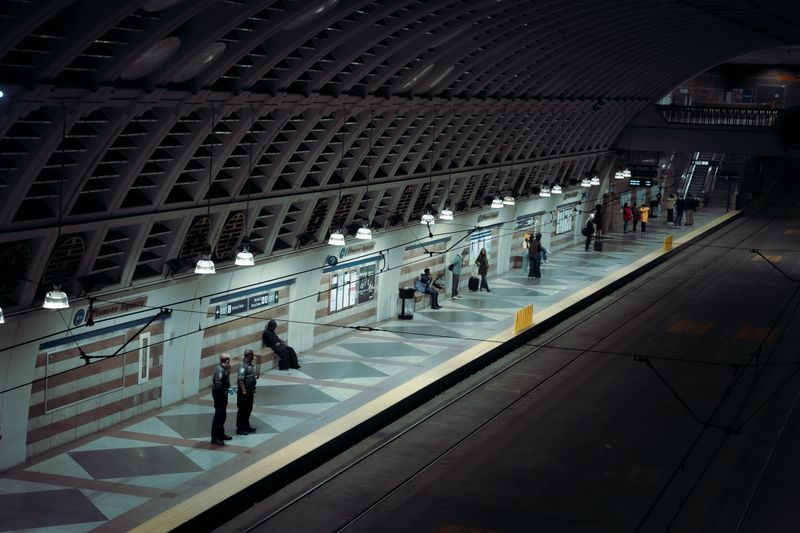
Everything here earned its place by changing an outcome. Nothing about depots and stabling is included to round the number up.
What matters most
- Dead running between depot and route is unproductive cost.
- Depot land is industrial in character and competes with housing.
- Electrification increases depot land and power requirements substantially.
Dead running is paid for and carries nobody
Every vehicle must travel from its depot to the start of its route and back at the end of the shift, carrying no passengers either way. That mileage consumes driver hours, fuel and vehicle life, and it appears in the cost of the route without appearing in the timetable.
A route far from any depot is therefore more expensive to operate than an identical route close to one. Operators bidding for contracts price this explicitly, which is why the location of available depot land influences which routes get tendered successfully. It also affects service patterns, since extending a route away from a depot adds dead running at both ends of every shift.
Depot land is industrial and contested
A depot needs a large flat site with vehicle access, fuelling or charging, wash facilities, workshops and staff accommodation. That is an industrial use, and it sits in a city where the same land is usually wanted for housing at a much higher value. Depots are consequently pushed outward over time, which increases dead running across the whole network permanently.
In practice, selling a depot delivers a one-off capital receipt and imposes a recurring operating cost for as long as the network exists. Cities that treat depot sites as strategic infrastructure rather than surplus land tend to have cheaper networks decades later.
Electrification changes the requirement
Battery buses charge at the depot overnight, which means each parking bay needs a charger and the site needs a substantial grid connection. Obtaining that connection can take years in areas where the local network has little spare capacity, which is a common constraint.
Over a decade, charging also lengthens the time a vehicle spends stationary, so a depot may need more parking to run the same service. Some operators use opportunity charging at termini instead, which reduces depot demand and introduces a dependency on street-side equipment. These are engineering choices with network consequences, and the grid connection is frequently the item that sets the programme.
Rail stabling is the same problem with worse geometry
Trains must be stabled on track, which means the land has to be adjacent to the network and long enough to hold a full formation. Suitable sites are scarce, and every extra train ordered to increase frequency needs somewhere to stand overnight.
Across a network, this is why fleet expansion sometimes stalls for reasons that have nothing to do with the trains or the timetable. Stabling near a terminus reduces empty mileage, and near-terminus land in a city is usually the most expensive on the line. Depot capacity is one of the least visible constraints on service growth and one of the most binding.
Depots as neighbours
Depots generate early morning and late night vehicle movements, which is precisely when neighbouring residents are most sensitive to noise. Site design can address a good deal of this through layout, acoustic barriers and routing decisions within the site. Electric fleets remove engine noise and leave tyre noise, reversing alarms, wash plant and door operation, which are not trivial.
Depots also provide skilled local employment, which is a genuine benefit that rarely features in the local debate about them. Building housing above a depot is technically possible and has been done, and it requires the depot to be designed for it from the start.
Reading depot constraints into a network
Look at where the first and last services of the day start and finish, because these usually reveal depot locations. Notice routes that terminate at apparently arbitrary points, since a terminus near a depot is often the reason.
At street level, check whether night services follow depot geography rather than demand, which is common and rarely explained to passengers. Where a city announces electrification, ask about grid connections rather than about vehicle orders, since that is the harder half. A network map explains the service, and the depot map explains why the service has the shape it does.
Everything above, in order of what to do first
- Dead running is paid for and carries nobody. Every vehicle must travel from its depot to the start of its route and back at the end of the shift, carrying no passengers either way.
- Depot land is industrial and contested. A depot needs a large flat site with vehicle access, fuelling or charging, wash facilities, workshops and staff accommodation.
- Electrification changes the requirement. Battery buses charge at the depot overnight, which means each parking bay needs a charger and the site needs a substantial grid connection.
- Rail stabling is the same problem with worse geometry. Trains must be stabled on track, which means the land has to be adjacent to the network and long enough to hold a full formation.
- Depots as neighbours. Depots generate early morning and late night vehicle movements, which is precisely when neighbouring residents are most sensitive to noise.
- Reading depot constraints into a network. Look at where the first and last services of the day start and finish, because these usually reveal depot locations.
The takeaway
Find the depot. It explains the timetable better than the demand map does.
Measure the walk, not the map.
Questions readers ask
Why do bus routes end in odd places?
Often because a depot, a turning facility or a stand is nearby. Termini are constrained by where a vehicle can wait and change drivers, not only by where passengers want to go.
What limits bus electrification most?
Usually depot power supply and land rather than vehicles. Grid connections can take years to secure, and charging increases the space each vehicle needs.


