Buildings
Cladding is a fire strategy before it is a finish
The outer skin of a building is judged in photographs and tested by flame spread. Those two assessments have almost nothing in common.
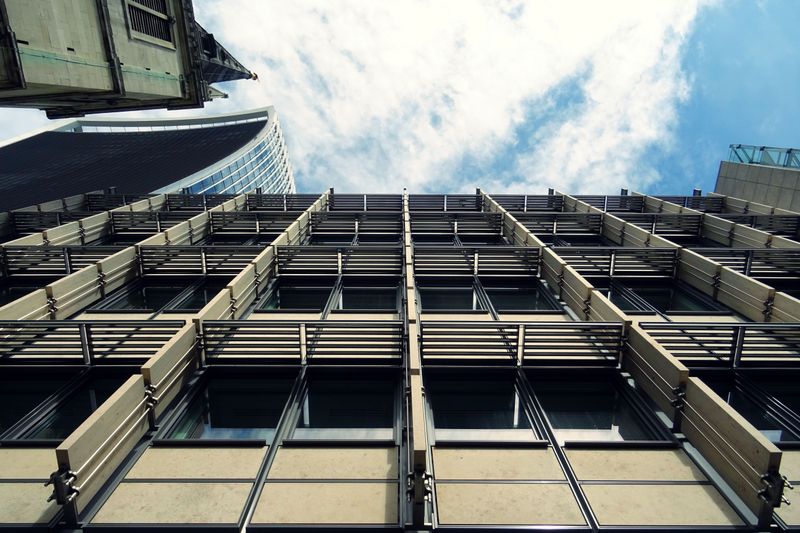
What follows is an argument about facade construction, and about where the received version of it stops being true.
The argument in brief
- A ventilated cavity behind cladding can act as a chimney if not properly interrupted.
- Combustibility of the whole assembly matters, not just the visible panel.
- Requirements changed substantially in several countries after major facade fires.
The facade is an assembly, not a panel
A modern rainscreen facade typically comprises an outer panel, a ventilated cavity, insulation, a supporting frame and a backing wall. Each layer can be combustible or not, and fire performance is a property of the whole assembly rather than of any single component.
This is why specifying a non-combustible panel over combustible insulation does not deliver a non-combustible facade. Testing regimes that assess whole assemblies at large scale exist precisely because component-level assessment misses the interaction.
The cavity is the mechanism
The ventilated cavity behind a rainscreen exists to drain and dry the construction, which is a genuine building physics requirement. It also provides a continuous vertical path in which flame and hot gases can travel rapidly upward, drawing in air as they go. Cavity barriers are installed to interrupt that path, and they must be continuous, correctly positioned and installed the right way round to work.
Missing or incorrectly fitted cavity barriers have been a repeated finding in post-incident investigations.
Insulation is where the fuel usually is
Plastic foam insulations offer high thermal performance per millimetre, which is valuable where wall thickness is constrained. Many of them are combustible, and their behaviour in a facade fire depends heavily on how they are encapsulated. Mineral fibre insulations are non-combustible and require greater thickness for the same thermal performance, which costs floor area.
Across a network, that trade between wall thickness and combustibility is the specification decision at the heart of most facade controversies.
Regulation moved, unevenly
Several countries tightened rules on combustible materials in external walls of tall residential buildings following major fires. Height thresholds, building use categories and the treatment of balconies and cavity barriers differ substantially between those regimes. A specification that is compliant in one jurisdiction may be prohibited in another at the same building height.
Anyone working across borders must verify the current national requirement rather than transferring a detail.
Remediation is the long tail of the problem
Buildings constructed under previous rules exist in large numbers, and identifying what is actually in a wall requires intrusive investigation. Costs of removal and replacement are high, and liability between developers, contractors, product manufacturers and owners has been contested at length. Residents in affected buildings have faced insurance, mortgage and sale difficulties for extended periods, which is a housing problem as much as a technical one.
In practice, this is the clearest recent demonstration that facade specification is not a cosmetic decision.
Water and heat still have to be managed
Fire is not the only performance requirement; the facade must also keep water out, allow drying, control heat loss and accommodate movement. Solutions that address fire while trapping moisture create a different long-term failure, usually invisible until it is severe. Good facade design resolves fire, water, thermal and movement requirements simultaneously rather than sequentially.
Where those requirements are handled by different consultants at different times, the junctions between them are where failures appear.
The takeaway
Ask what is behind the panel. The visible material is rarely the material that matters.
The design decision is visible long after the people who made it have gone.
Questions readers ask
Is metal cladding safe?
It depends on the whole assembly. Some composite panels have a combustible core between metal skins, and the insulation and cavity behind any panel matter as much as the panel itself.
What are cavity barriers?
Components installed within the ventilated cavity to close it at intervals and at openings, interrupting the vertical path that fire and hot gases would otherwise take.