
Transit
Night service is a maintenance window before it is a timetable
The hours a network does not run are decided by engineering access, staffing and depots rather than by whether anyone wants to travel.
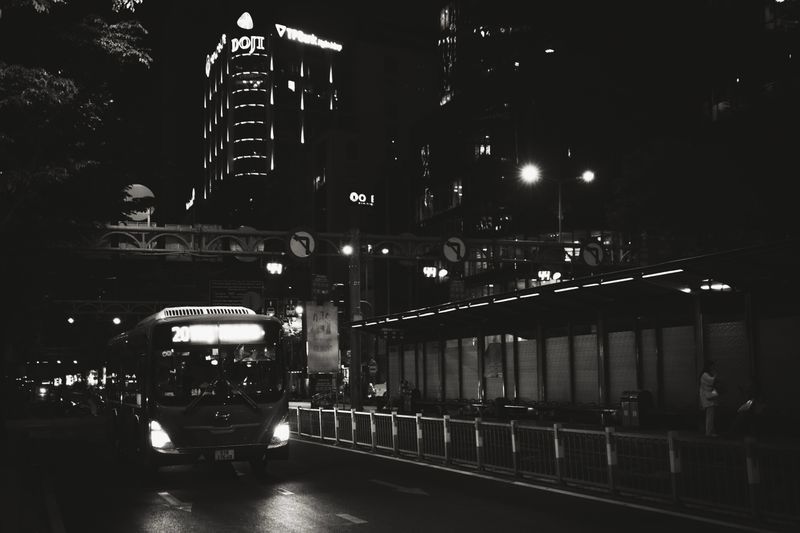
Most explanations of night services stop at the point where it starts to matter. This one carries on.
The short version
- Metro systems need closed hours for track and tunnel work.
- Night demand is thin overall and heavily concentrated on a few corridors.
- Buses carry most night travel in most cities, and often carry shift workers.
The night is when the network gets repaired
Track renewal, tunnel inspection, signalling work and cleaning all require the power off and the running lines empty of passenger trains. A metro that closes for several hours is buying an engineering window, and the window is the reason the service is reliable during the day. Systems that run through the night generally have paired tracks, extra tunnels or long single-track possessions that let work continue beside a running service.
That redundancy was either built in at construction or acquired expensively afterwards, which is why the choice is often made once and permanently. Any proposal for all-night running therefore has to answer the engineering question first, because the timetable is downstream of it.
Staffing at night costs differently
Night work usually attracts premium pay, requires different rostering rules and is harder to fill, so the cost per vehicle hour rises. Supervision, control room staffing, security and station presence all have to continue even where passenger numbers are very low.
On the ground, rosters that cross the night affect fatigue management, and safety regimes in most countries limit how such shifts can be constructed. The result is that the marginal cost of a night hour is substantially above a daytime one while the revenue is far below it. This is why night service is generally justified as a social or economic service rather than on farebox arithmetic.
Demand is thin and sharply concentrated
Night travel is not a scaled-down version of daytime travel, since the trip purposes are different and the destinations are fewer. Two groups dominate, being people travelling home from social activity and people travelling to or from shift work in hospitals, logistics and cleaning. The first group is concentrated in time and geography, clustering around entertainment districts at closing hours in a sharp peak.
On the ground, the second is spread thinly across the whole night and across the whole city, which is much harder to serve with a network. A night network designed only around the first group leaves the workers who keep the city running to make their own arrangements.
Perceived safety decides whether it is used
Waiting alone at night is the part of the journey people report as uncomfortable, and it deters use more than the journey itself does. Lighting, sightlines, staffing and the presence of other passengers matter more than any published safety statistic, because the decision is made in advance. Long headways make this worse, since a twenty-minute wait in an empty station is a different experience from a five-minute one.
Frequency therefore has a safety function at night that it does not have at midday, which complicates any argument for thinning the service.
Design measures such as staffed entrances and shortened platform waiting areas address the perception directly rather than through reassurance messaging.
Buses carry the night in most cities
Night buses need no engineering window, run on infrastructure already lit and maintained, and can be added or withdrawn without capital works. Their weakness is speed and legibility, since night routes often follow different paths from day routes and passengers have to learn a second network.
Numbering night routes to match their daytime equivalents, where the road layout allows, removes a large part of that learning cost. Interchange collapses at night because connections between infrequent services are unreliable, so direct routes matter more than they do by day. A radial night network that only serves the centre forces cross-city trips through it, which suits people going home and not people going to work.
The trade-offs cities actually face
All-night metro on a few lines, night buses everywhere, or extended evening hours are three different answers to three different demands. Extending the evening by an hour or two often serves more people than running all night, because it captures the end of social activity.
All-night running on weekend nights only is a common compromise, since it matches the concentrated peak without committing every night. Whichever is chosen, the shift workers travelling at unattractive hours are the group most likely to be left out of the arithmetic. Stating who a night network is for makes the design decisions much clearer than treating it as a uniform extension of the day.
The takeaway
Ask who is travelling at four in the morning. The answer should design the network.
Measure the walk, not the map.
Questions readers ask
Why do most metro systems close overnight?
To create an engineering window for track, signalling and tunnel work with the power off. Systems that run all night usually have extra tracks or tunnels that allow work alongside a live service.
Is night service worth the cost?
It rarely covers its costs from fares. Whether it is worth running depends on what value a city places on shift workers reaching work and on evening activity, which is a political judgement rather than an accounting one.


